Types of industrial refrigeration based on capacity and dimensions
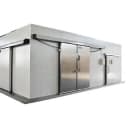
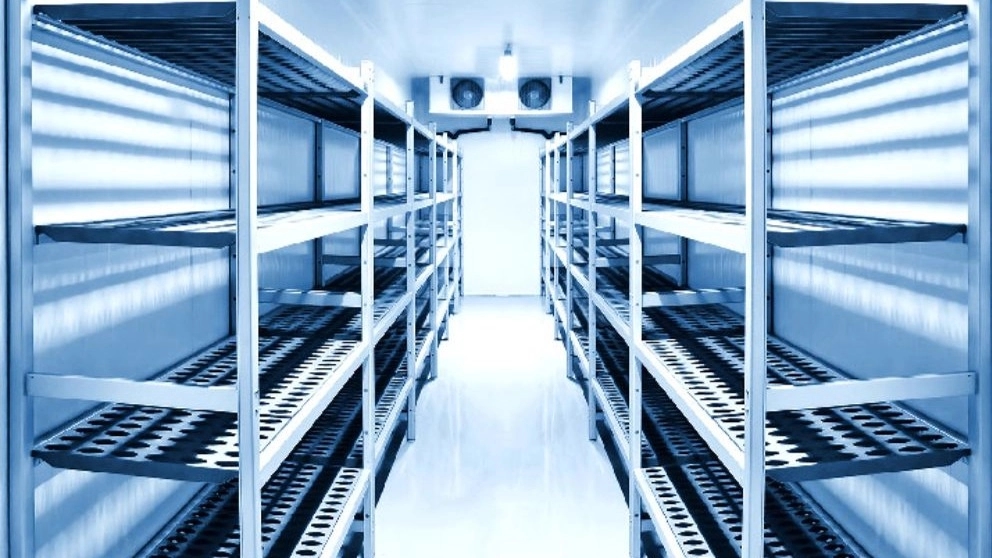
Room or small refrigerator: This type of refrigerator is usually used to store food in hotels, restaurants, and fruit storage and distribution centers. This model, which is made in two sizes, small and medium, is insulated by a sandwich panel. The model is usually made of metal and is designed and made in small and mobile dimensions. It is usually made in high capacities and is suitable for storing food in large volumes. The large cold room consists of a number of cold rooms, each of which is dedicated to the storage of a specific category of food.
Types of industrial refrigerator based on food shelf life
Long-term cold storage: In such cold storages, special measures should be taken for long-term storage of food. For example, the oxygen concentration should be at the lowest level so that the food does not spoil. For this purpose, these cold stores must be equipped with an air lock system. Short-term cold storage: This model is actually the same type whose main task is to control the air inside the warehouse.
Components of industrial cold stores
This product is very similar to the chiller from the point of view of its internal structure, and many of its components are the same as those used in the chiller. In the following, these parts are analyzed.
Electromotor: It is an electrical device whose task is to provide energy. The electric motor actually drives the compressor.
Compressor: This device is responsible for condensing the refrigerant gas inside the cold room. By applying pressure on the refrigerant gas, the compressor increases its temperature so that it turns into steam. Condenser: The cooling of the dense and flowing gas from the compressor to the refrigerator is done by this device. Storage gas: The heat of the material inside is absorbed by this gas (usually Freon) and transferred to the condenser. As a result of this work, the materials are cooled. Of course, the use of Freon is limited because it is harmful to the environment, and a variety of environmentally friendly refrigerant gases are used instead. Evaporator: This device plays the role of cooling inside the cold room, so that it enters the cold room environment through the cooling fans (by the condenser). Connection pipes: Gas or cold steam is transferred to different areas and sections of the cold store using these pipes. Oil separator: This device consists of a net, a metal plate and a floater, whose task is to separate the leaking compressor oil. Receiver: This component is responsible for maintaining the liquid refrigerant inside the condenser. Filter drier: This device is a type of purifier whose purpose is to absorb moisture inside the system. Expansion valve: This valve works automatically and sprays the refrigerant inside the evaporator. Collection tank: This device actually turns the liquid refrigerant into vapor and prevents the liquid refrigerant from returning to the compressor.
Performance of Industrial Cold
In the following, the performance of the cold room and how to carry out the process of cooling and freezing the food inside it will be discussed. First, the electric motor is turned on and at the same time, the compressor starts working. Refrigerant is sucked from the low pressure area through the compressor and moves to the high pressure area where it is pressurized. Then, according to the applied pressure, the refrigerant turns into a hot and dense gas and goes to the oil separator. After filtration, the floater is opened and the oil is returned to the compressor.
The condensed refrigerant moves to the condenser and cools and turns into a liquid with ambient temperature and then flows to the receiver. This refrigerant is sprayed into the evaporator through the expansion valve. Then, due to the sudden pressure reduction of the boiled refrigerant, it absorbs the heat of the materials and the surrounding air and cools the pipes and fins. The coldness of the blades is blown into the cold room by means of a blower fan. After passing through the collector tank, the saturated refrigerant returns to the compressor to start the refrigeration process on it again. This cycle is repeated until the temperature inside the cold room is adjusted.